
Video Remote Interpreting Services: When VRI Works for Bay Area Organizations

Quick Summary: Video remote interpreting services connect you to a professional interpreter over a live video link, often in minutes, without the cost and scheduling limits of an on-site visit. VRI works best for short-to-medium conversations where seeing the interpreter matters: clinic visits, customer service desks, HR meetings, and American Sign Language. This guide explains how VRI works, when it beats phone or on-site interpreting, what technology it needs, and how to choose a provider. It closes with how Auerbach International supports Bay Area organizations with interpreters in 120+ languages.
What Video Remote Interpreting Services Are
Video remote interpreting services (often shortened to VRI) let a professional interpreter join a conversation through a live video connection instead of standing in the room. The interpreter sees and hears everyone, and everyone sees and hears the interpreter. A front desk can use a tablet on a stand. A conference room can use its wall display. An employee working from home can join from a laptop.
VRI sits between two other options. Phone interpreting is fast, but there is no picture. On-site interpreting gives the fullest presence, but it takes travel time, scheduling, and a higher fee. VRI adds the visual channel to a remote session, which is why organizations that see a steady flow of clients who speak other languages often use it as their everyday tool. Auerbach International offers VRI alongside on-site and telephone options in its interpretation services.
How a VRI Session Works
Most sessions follow the same simple path. You request an interpreter for a language, either on demand or by appointment. The provider connects a qualified interpreter, and the video call begins. The interpreter introduces himself or herself, confirms that everyone can hear and see clearly, and then interprets in either consecutive or simultaneous mode depending on the setting. In a consecutive session, each speaker pauses so the interpreter can convey the message. Our overview of consecutive interpretation explains how that rhythm works.
Two habits make a session smoother. First, speak in short, complete thoughts and pause. Second, look at the person you are talking to, not the screen, the same way you would in a face-to-face conversation. The interpreter handles the rest.
When VRI Is the Right Choice

VRI tends to be the strongest fit in these situations:
- Walk-in and short-notice needs. A patient, tenant, customer, or student arrives and speaks a language your staff does not. On-demand VRI can bring an interpreter into the conversation quickly.
- American Sign Language. Sign language depends on hands, face, and body. Video keeps that visual channel open, which a phone call cannot. See our page on ASL interpretation and VRI for how remote ASL sessions are arranged.
- Distributed teams. When participants are in different offices or working from home, a remote interpreter joins the same call they are already on.
- Less common languages. A remote pool can reach interpreters who live far from your location, so a Bay Area clinic is not limited to the interpreters within driving distance.
- Routine, moderate-length conversations. Intake appointments, benefits explanations, HR check-ins, and customer service calls fit VRI well.
On-site interpreting still has a place. Long, emotionally heavy, or highly technical sessions, and settings where the interpreter needs to be physically near the participants, are usually better served in person. For legal matters, our guide to court and deposition interpretation covers why the format is chosen carefully, and the rules of the court or tribunal come first.
VRI vs. Phone Interpreting
The difference comes down to what the conversation needs. With phone interpreting, the interpreter hears the conversation but cannot see the participants. That is often enough for a quick question, a billing call, or an appointment change, and it is typically the simplest and lowest-cost path. Our guide to over-the-phone interpreting services explains when it is the better tool.
VRI earns its place when visual information matters. The interpreter can read body language, notice confusion, and see what a participant is pointing to. In sensitive conversations, such as a medical consultation or a workplace investigation, that added context can help the interpreter interpret accurately and help the participants feel understood. Many organizations use both: phone for quick exchanges, VRI for conversations where seeing each other adds value.
Technology and Quality Requirements
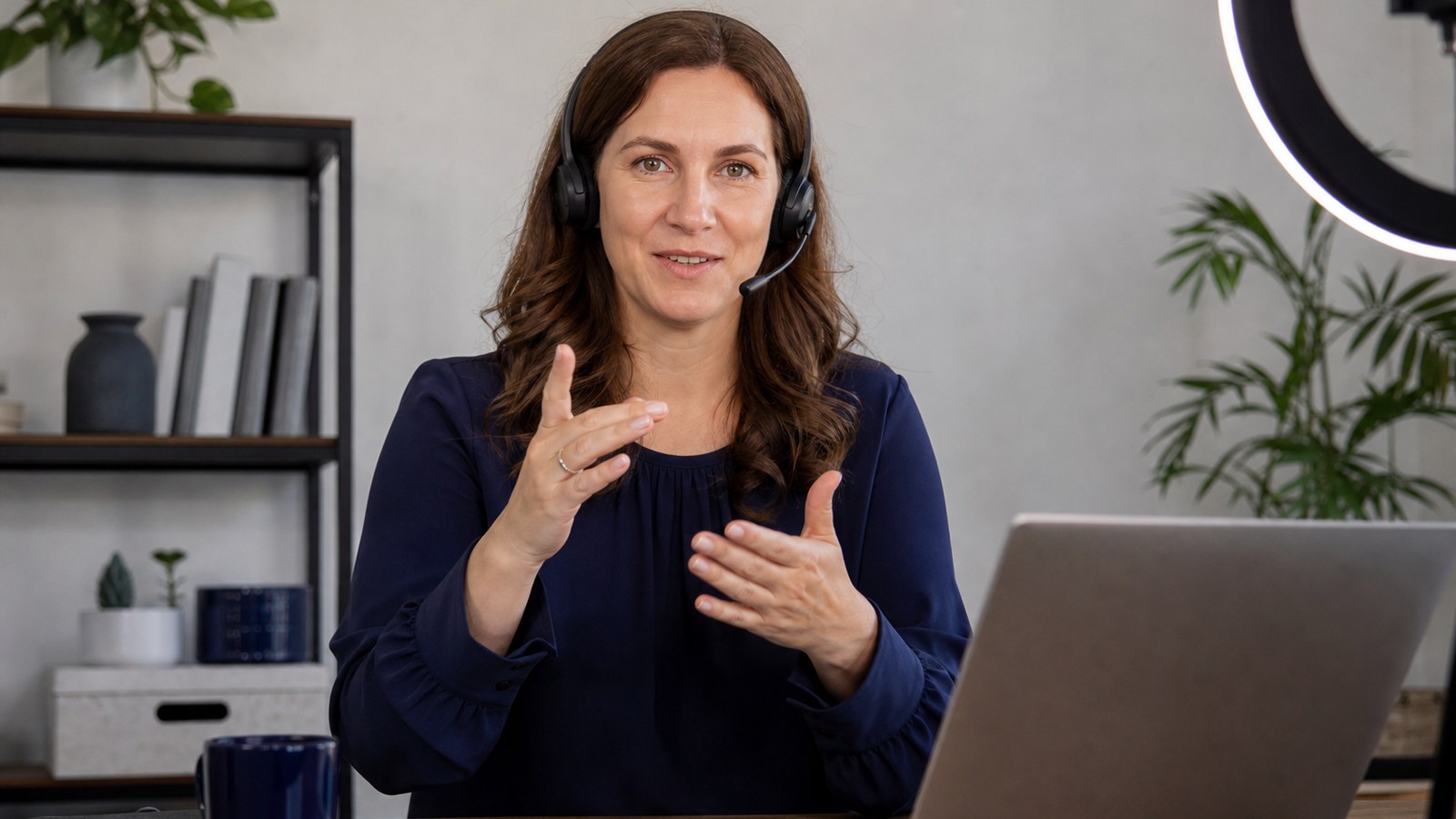
A VRI session is only as good as its connection. Federal rules for health programs that receive federal financial assistance spell out the basics. Under 45 CFR § 92.201, video remote interpreting must provide:
- Real-time, full-motion video and audio over a high-speed connection, without lags, choppy, blurry, or grainy images, or irregular pauses in communication.
- A sharply delineated image large enough to show the interpreter's face and the participant's face, regardless of body position.
- A clear, audible transmission of voices.
- Adequate training for the people who set up and operate the technology.
Those standards are written for health care, but they are a good checklist for any organization. Before you go live, test the device, the camera angle, and the audio. Place the screen where every participant can see it. Choose a quiet room. Confirm that the platform protects confidentiality, especially for medical, legal, or HR conversations, and that the provider will not record a session without permission.
The interpreter matters as much as the equipment. Ask how the provider screens, tests, and trains interpreters, and whether they have subject-matter experience in your field. A fluent speaker who is not a trained interpreter is not a substitute. If you are building a broader plan for serving multilingual clients, our guide to a language access plan for Bay Area organizations shows where VRI fits.
VRI in Health Care and Other Bay Area Settings
Health care is where VRI is most established. Clinics and hospitals can use a tablet on a rolling stand to bring an interpreter into an exam room within minutes, which supports safer, clearer conversations about symptoms, consent, and follow-up care. For a deeper look at that setting, read our guide to medical interpretation services.
Outside health care, Bay Area organizations use VRI in several other places:
- Government and public services. Front counters and call centers that serve residents who speak many languages.
- Education. Parent-teacher conferences and enrollment meetings.
- Employers. Onboarding, benefits enrollment, safety training sessions, and HR meetings.
- Legal and professional services. Client intake and consultations, where the rules for the specific setting allow it.
The Americans with Disabilities Act also requires effective communication with people who are deaf or hard of hearing, and remote ASL interpreting can be one way to meet that need when it works well for the person involved. The ADA.gov website explains the requirements, and an organization should confirm which option fits each situation.
How to Choose a VRI Provider
Compare providers on the things that affect a real session, not only the price per minute. A short checklist helps:
- Language coverage. Confirm the languages you need today and the ones you may need next year, including ASL.
- Interpreter qualifications. Ask about screening, testing, and specialty experience such as medical or legal.
- Connection time. Ask how quickly an on-demand interpreter typically connects and what happens if a language is unavailable.
- Device flexibility. The service should work on the tablets, laptops, and conference systems you already own.
- Confidentiality and privacy. Ask how sessions are protected and how the provider handles HIPAA-sensitive conversations.
- Backup options. A provider that also offers phone and on-site interpreting can switch formats when a session calls for it.
- Support. Look for training for your staff and a real person to call when something goes wrong.
How Auerbach International Supports Video Remote Interpreting
Auerbach International has provided language services to Bay Area and global clients since 1990, with interpreters in 120+ languages. Our team offers scheduled and on-demand video remote interpreting, on-site interpreting, and telephone interpreting, so you can match the format to each conversation rather than forcing every situation into one tool. We can also help you plan which settings suit VRI and which call for an interpreter in the room.
If your organization wants to add video remote interpreting or review how you serve multilingual clients today, request an interpretation quote and tell us the languages, settings, and expected volume. We will recommend a format for each situation.
Frequently Asked Questions
What are video remote interpreting services?
Video remote interpreting services connect people who speak different languages to a professional interpreter over a live video link. The interpreter joins from a remote location through a tablet, laptop, or conference room display, and interprets the conversation in real time. VRI can be used for spoken languages and for American Sign Language, where seeing the interpreter is essential.
Is video remote interpreting as accurate as an on-site interpreter?
For most conversations, yes. The interpreter hears and sees the same people, and a qualified professional interprets with the same skill whether he or she is in the room or on a screen. On-site interpreting is still the better choice for very long, highly sensitive, or physically complex sessions, such as a multi-day negotiation or a procedure where the interpreter needs to be near the patient.
When should I choose VRI instead of phone interpreting?
Choose VRI when facial expressions, gestures, or visual context matter. That includes ASL, conversations with a patient who is hard of hearing, and meetings where people are reading each other's reactions. Phone interpreting is a fast, lower-cost option for short exchanges where visual cues add little.
What equipment and internet speed does VRI require?
You need a device with a camera, microphone, and speaker, plus a stable broadband or wireless connection that delivers smooth, full-motion video without lag or blur. Federal health care rules describe these same basics, so testing the connection and the audio before the session starts is the simplest way to avoid trouble.
Can VRI be used for legal proceedings and medical appointments?
Often, yes, but the rules depend on the setting. Health care organizations use VRI regularly, and federal regulations set quality standards for it. Courts, agencies, and attorneys each have their own requirements for remote interpretation, so confirm what is allowed with the court or your counsel before scheduling a proceeding.
How far ahead should I book a video interpreter?
For common languages, on-demand VRI can often connect within minutes. For less common languages, ASL, or scheduled meetings, book as far ahead as you can and share the date, time, language, and topic so the provider can match the right interpreter.